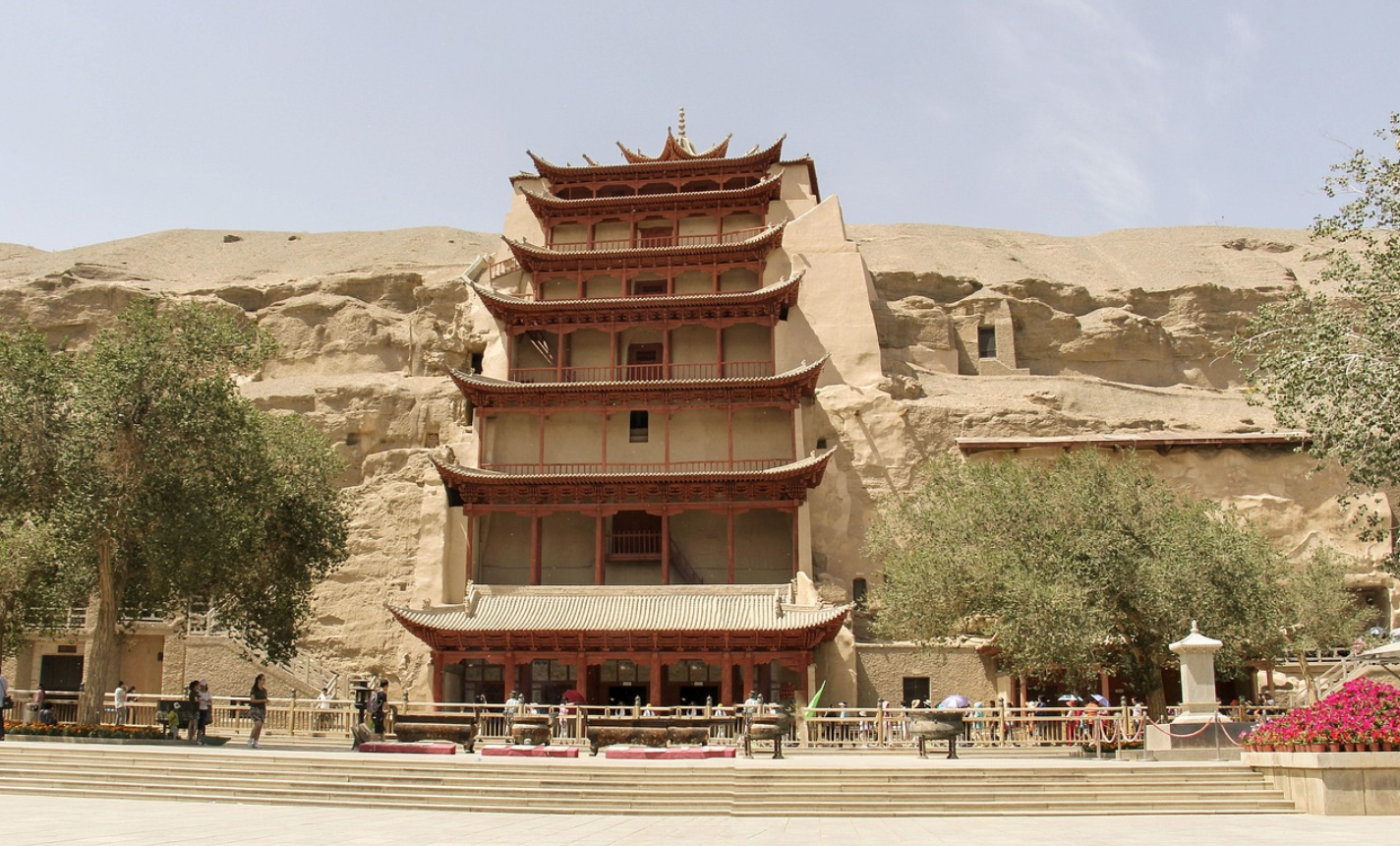
The story: In 366 AD, a monk named Le Zun saw a golden vision on a cliff above the Dachuan River and carved the first cave shrine there. Over the next 1,000 years, 735 caves were cut into the cliff, decorated with 45,000 square meters of murals and 2,400 painted sculptures — a Silk Road masterpiece mixing Chinese, Indian, Persian and Greek influences. A UNESCO World Heritage Site since 1987, it's known as the 'Louvre of the Desert'.
Why it's a must-see: The murals are simply overwhelming: flying apsaras (heavenly dancers), thousand-armed Bodhisattvas, and the story of Buddhism's journey across Asia painted in colors that still glow after 1,400 years. Only a small number of caves are open to the public each day, which keeps it intimate — and the experience of standing in a 1,000-year-old cave is unlike anything else in China.
💡 Kat's tip: Book tickets at least 2 weeks ahead (they sell out — daily limit is 6,000). Entry from 238 RMB includes a 30-minute documentary and a guided tour of ~8 caves. Bring a small flashlight for the darker caves; photography is forbidden inside (they enforce it).