How to Take a Public Bus in China
The metro gets all the attention, but buses go where the metro doesn't. No English announcements, no idea where to pay — here's exactly how to ride one without panicking.
The 10-Second Version
1. Set up your code first
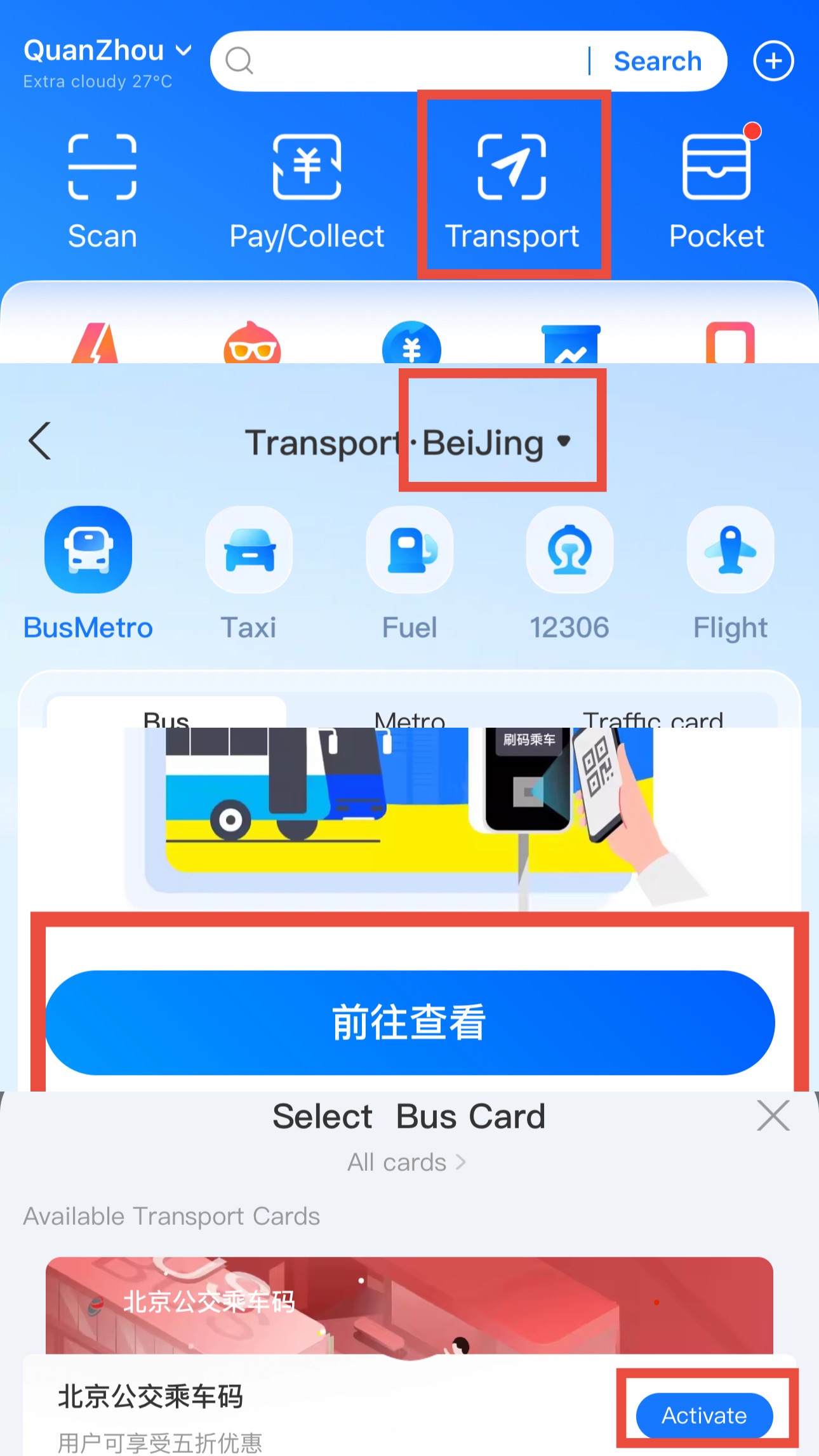
Activate your transport QR code in Alipay before you need it — do this from your hotel, not the bus stop.
2. Board at the front
Scan your code on the reader by the driver as you get on. Flat fare, usually ¥1–3 RMB.
3. Watch your stop
Track your position on Amap or Baidu Maps — don't rely on catching a Chinese-only announcement.
4. Exit at the back
Press the stop-request button (although most drivers stop at every stop), then get off through the rear door — even though you boarded at the front.
Set Up Your Transport QR Code Before You Travel
Do this from your hotel or apartment with good wifi — not standing at a bus stop with a queue behind you.
Using Alipay (recommended)
- 1Complete passport identity verification in Alipay if you haven't already (see our Alipay guide).
- 2Link an international Visa or Mastercard — no Chinese bank account required.
- 3Tap the transport icon on the Alipay home screen, or search "公交地铁" (bus & metro).
- 4Select your city and activate the transit code — you'll need to activate it separately for each city you visit.
- 5Your personal QR code now generates on demand under the transport tab.
Prefer WeChat? Search "乘车码" (chéngchēmǎ) inside WeChat Pay — setup is similar, though foreign card support varies more by city.
Find Your Bus and Stop
- •Use Amap (高德地图) or Baidu Maps for accurate routes and real-time arrival — Google Maps does not reliably work for China transit.
- •Bus stop signs list every route number that stops there, with the full sequence of stops in Chinese. Match your route number carefully.
- •Bus numbers in big cities run into the hundreds — double check you're boarding the right one, since several routes often share a stop.
Board and Scan Your Code
- 1Buses board through the front door only in most cities. Have your code ready before you reach the driver.
- 2Open Alipay, tap the transport icon, and let your code generate. Max out your screen brightness.
- 3Hold the code 5–10 cm from the reader by the driver for 1–2 seconds until it beeps green.
- 4Fares are flat on almost all city routes — pay once on entry, no tapping out.
Find a Seat (or Hold On)
- •Seats near the front are reserved for elderly, pregnant, and disabled passengers — marked with a special icon.
- •Standing is completely normal, even for long rides. Hold the overhead rail — buses brake hard and often.
- •Rush hour is roughly 7:30–9am and 5–7pm. Riding just outside those windows is far more comfortable.
Know When to Get Off
- •Most buses announce the next stop over a speaker and on a screen — usually Chinese only, sometimes English or pinyin in bigger cities.
- •Track your live location on Amap or Baidu Maps instead of relying on the announcement.
- •Press the red stop-request button one stop before you want to get off — buses generally don't stop unless requested.
- •Exit through the rear door — the norm across almost every Chinese city, even though you boarded at the front.
FAQ: Things Nobody Tells You About Chinese Buses
🗺️ Get the Free Transit Cheat Sheet
A printable one-pager: Alipay transport code setup, bus vs metro vs bike, and the Chinese characters for "next stop" and "get off here."